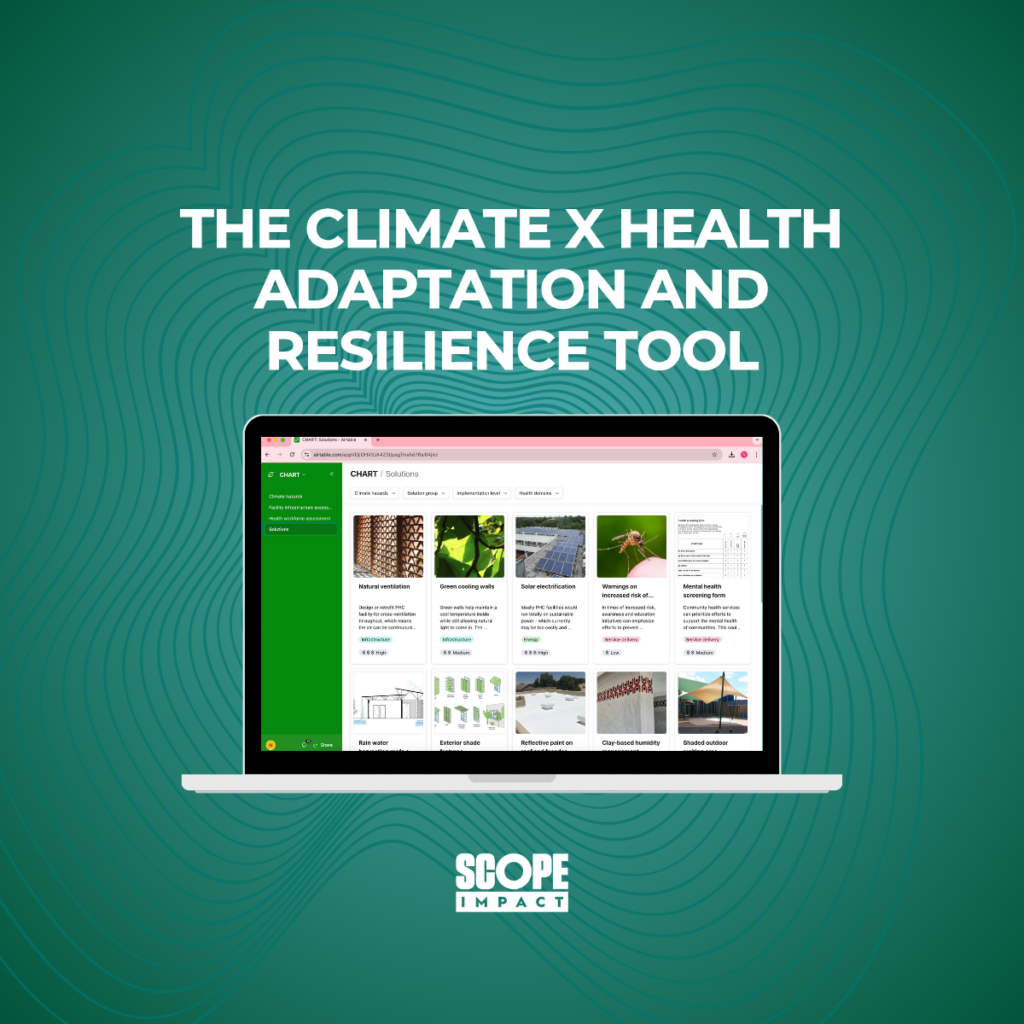
Scope Impact is thrilled to announce that UBS Optimus Foundation has provided funding for the launch of the Climate x Health Adaptation and Resilience Tool (CHART), an innovative digital platform designed to address the growing health challenges posed by climate change. The tool aims to support local primary healthcare and community actors to understand their risks and plan for interventions to protect the health of those most vulnerable. This pioneering tool will first focus on protecting maternal, newborn, and child health from heat stress, and will be launched in India and Kenya.
Responding to the 21st century’s biggest health threat
Climate change has been declared the biggest threat to health in the 21st century. With increasing occurrences of extreme heat, excessive rainfall, flooding, and prolonged drought, communities around the world are facing unprecedented health risks and challenges. These climatic events are straining health service delivery, damaging health infrastructure, and disconnecting communities from essential care. Locally-led adaptation will be essential to respond to increasing threats and ensure equity in health outcomes.
Introducing CHART: A comprehensive solution
In response to these urgent challenges, Scope Impact has developed CHART, an AI driven climate and health adaptation and resilience tool. CHART is designed to provide local health system actors, organizations, and community leaders with contextually relevant data and resources to prevent, mitigate, respond to, recover from, and adapt to climate-triggered health impacts.
The tool encompasses a three-step process:
This first phase of CHART particularly addresses the unique risks faced by maternal, newborn and child health due to climate change, with a focus on heat stress. These increased risks include gestational diabetes, hypertensive disorders, preterm birth, low birth weight, and stillbirth, as well as health issues related to poor nutrition, water, hygiene, and sanitation. Additionally, the mental health impacts of women, and the heightened vulnerability of newborns and infants, are key focus areas of the project.
Beyond addressing immediate health risks, CHART aims to reduce health system contributions to climate change by promoting environmentally sustainable practices, improved waste management, and reduced carbon emissions.
CHART is envisioned as a global good that will be open access, and we look forward to sharing learnings as well as collaborating with partners across the co-design and implementation process.
We are grateful to UBS Optimus Foundation for both their support and expert guidance as we launch CHART.
Back to news